
Immusoft’s Approach
Immusoft is developing a cutting-edge approach to sustained delivery of protein therapeutics using a patient’s own cells. By leveraging our Immune System Programming (ISP™) platform, we collect a type of the patient’s immune cells, called B cells. In response to immune stimulation, B cells can turn into a biofactory state known as a plasma cell. Plasma cells manufacture and secrete thousands of antibodies per second. We harness the plasma cell’s biofactory capabilities by engineering B cells to produce a specific therapeutic protein.
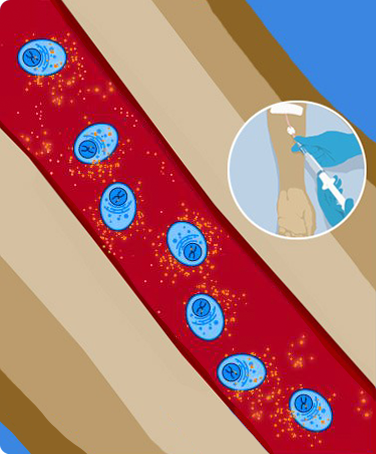
Once we have engineered the B cells, we expand and differentiate them into plasma cells (or, stated simply, coax them into the biofactory state) that produce massive amounts of our therapeutic protein. Thereafter, we infuse the programmed cells back into the same patient, where they take up residence and produce therapeutic proteins for extended periods of time.





What are the advantages of B Cells?
B cells offer distinctive advantages over other systemic (delivered in the bloodstream) gene therapy / protein delivery approaches. Other gene therapy approaches predominantly entail either injection of viruses that encode the therapeutic gene, or modification of stem cells that are transferred back to the patient.
In the case of virus delivery, there is currently no way to re-deliver the treatment. So, for a successful virus gene therapy, the following are required:
- The dose has to be right the first time
- The effect must not diminish over time
- As the patient grows, the amount of protein must increase to maintain a stable protein per Kg ratio
- The benefits must outweigh the risks
The field of viral gene therapy has unfortunately encountered several serious safety hurdles in recent years.
Because our approach is non-viral and uses the patient’s own cells, Immusoft is able to give patients additional doses (which has been demonstrated clinically) to overcome the above issues.
In the case of stem cell-mediated gene delivery, patients must undergo extensive myeloablation (chemotherapy) to knock out the patient’s immune system to make room for the newly modified stem cells. Myeloablation can be a highly toxic and unpleasant procedure. It usually requires hospitalization and is sometimes fatal. Immusoft’s approach does not require myeloablation and therefore avoids the associated hospitalization and adverse events.
The other approach we believe we will improve upon is direct infusion of proteins, with Enzyme Replacement Therapies (ERTs) being an initial target. Enzyme replacement therapies require weekly infusions that can take up to four hours at a time. Aside from the substantial disruption in the patient’s and caregivers’ lives, these enzymes do not last long, and we believe patients would benefit from a sustained, steady-state delivery over extended periods.
B cells also offer the advantage of being able to produce a multitude of protein types. At Immusoft, we have successfully encoded B cells to produce enzymes, antibodies, structural proteins, and signaling proteins. Each of these protein types represents major opportunities to improve upon existing modalities or develop entirely new ones, potentially improving the lives of patients in need of better therapies.
Research
See the latest publications and presentations from Immusoft in the News section.
If you are interested in becoming a collaborator or sponsor investigator, please submit your proposal to researchproposals@immusoft.com.